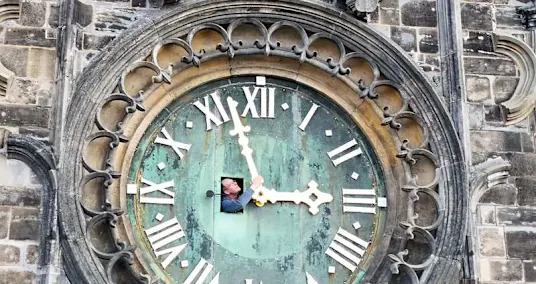
Clocks across the majority of European countries are set to go forward by one hour early on Sunday as the continent moves to daylight saving time, also known as summer time.
Clocks in most European nations including Germany advance by one hour at 2 am (0100 GMT) to 3 am, heralding longer evenings and brighter days.
This means that for the coming months parts of Europe will be on Central European Summer Time (CEST), before moving back to Central European Time (CET) in the autumn, when clocks go back again by an hour on October 25.
The aim of the change is to make better use of daylight in the shorter days of the winter in the northern hemisphere.
The signal for the automatic changeover of the clocks in Germany comes from the Federal Institute of Physics and Metrology (PTB) in the northern city of Braunschweig, also known as Brunswick in English.
The institute's experts ensure that radio-controlled clocks, station clocks and many industrial clocks are supplied with the signal via a long-wave transmitter called DCF77 in Mainflingen near Frankfurt.
LATEST POSTS
- 1
 Figure out How to Introduce Sunlight powered chargers on Your Rooftop securely
 - 2US FDA declines to approve Corcept's drug for rare hormonal disorder
- 3Careful Nurturing: Techniques for Bringing up Tough Children
- 4Finding Europe's Head Traveler Objections: An Excursion Through Famous Attractions
- 5NASA releases new photos of interstellar comet 3I/ATLAS


- Zelensky sees new Russian attack threat from Belarus
- Netflix is releasing a documentary on Elizabeth Smart. What to know about her kidnapping, rescue and where she is now.
- Extreme Manual for Purchasing Your Next Truck
- Figure out How to Ascertain the Restitution Time frame for Your Sunlight based chargers
- Journalists killed by Israeli strike in southern Lebanon
- The Difficulties of Getting a Green Card in the US
- Industrial zone damaged in Negev, falls in Sharon area after Iran fires missiles towards Israel
- Eating Brie, Gouda, cheddar may lower dementia risk, new study says
- Europe pledges over €15bn for clean energy for Africa